Wind Tunnel Testing
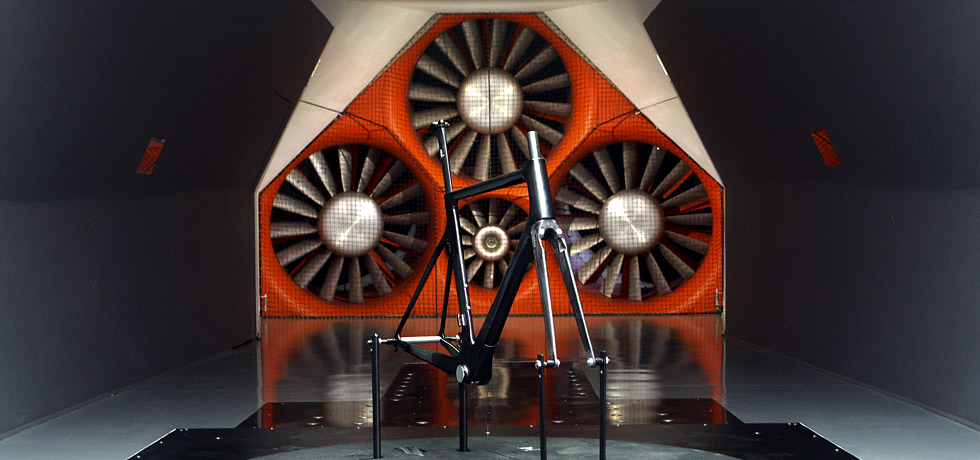
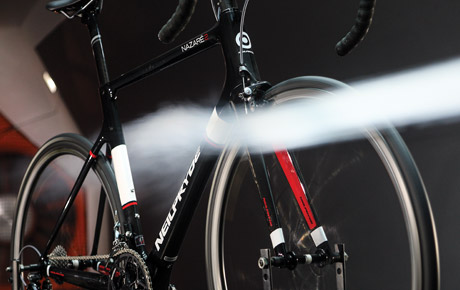
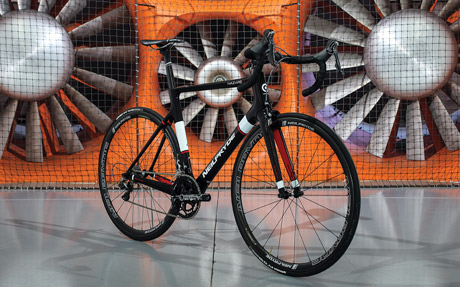
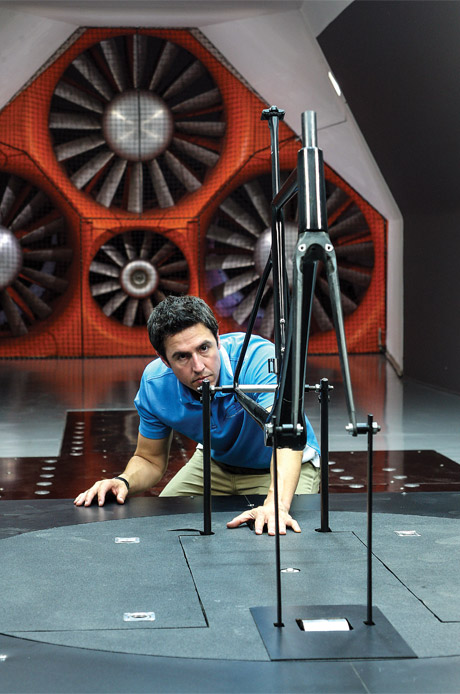
Through computational fluid dynamic modeling and extensive wind tunnel testing (which is much more fun that sitting in front of a computer) our aerodynamicists developed a revolutionary design that "tricks" the traditional Kammtail behind the lower down tube to extend further.
Computational
Fluid Dynamic Analysis
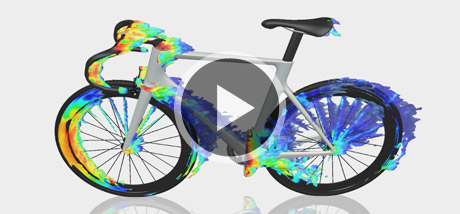
You can't refine the design of an aerodynamic road bike without conducting extensive wind tunnel testing, and you shouldn't venture into a wind tunnel before understanding the aerodynamic performance of each tube, joint and transition. This is only possible through utilising Computational Fluid Dynamics to understand the intricate nature of air flowing around the complex structures of a road bike. It isn't just about making a bike look skinny from the front; decreasing the frontal area of the frame. If only aerodynamics were that simple.
FINITE ELEMENT ANALYSIS

When we first began to dream about developing cutting-edge, high-performance road bikes we started as we do with most of our projects, with a blank piece of paper. However, while the paper may have been blank, the knowledge base from which the designs came from was extensive. We've cut and stitched, molded and formed, machined and extruded, a variety of materials over the last 40 years to make a wide range of products that enable athletes to push the boundaries.
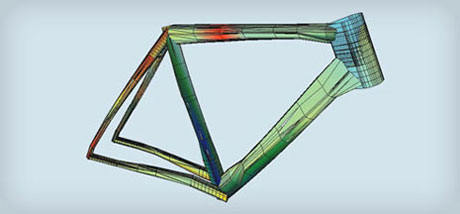
When you're developing high-performance products you need to understand the properties of the materials you're working with and the forces involved. In the early stages of development we used Finite Element Analysis extensively to investigate the structural performance of the bike frames and their response to dynamic loadings. This method considers the components of the frame as a mesh and mathematically determines the displacement of the nodes of the mesh under applied loadings so that the performance of the frames can be optimised for their design function.