Written by William B. Reynolds III
0) Reviving:
On November 7th 2004, I was near gravely wounded by the shrapnel from an IED on a dismounted patrol in Southwest Baghdad while serving as an Infantry Officer: Chief of Reconnaissance and Sniper Employment Officer for the 10th Mountain Division. After the blast, finding my foot on the front of my hip, and audibly/visibly losing a lot of blood, my self-prognosis was that I would not survive, and I told the combat life-savers in my platoon to attend to other casualties. However, the well trained soldiers that Henry Adames and Joey Collier were, they did not listen, (a welcomed insubordination!) saved my life, reassured me, and called in the Medical Evacuation (MEDEVAC).
After a life-saving, day long surgery at the Baghdad Combined Arms Service Hospital (CASH), I was on my way home via Balad and Landstuhl AFBs and hospitals. By the time I reached Walter Reed Army Medical Center (WRAMC) on November 13th, 2004, I was only 4 surgeries into my treatment, but stable. The next 7 surgeries were complex as they further stabilized me, rid me of infections , and started the left arm and leg “limb salvage”process. My pre-op consults for all the surgeries were the same: “We’re going to conduct an irrigation and debridement and other limb saving procedures, and if they do not go well, you could wake up without your leg.”Some would find that disconcerting, but I was optimistic—I was alive, I was with family (Medical Research Partner William Reynolds—my father Nurse Evelyn Reynolds—my mother; Dr. Evelyn Reynolds, Suzzanne Anicette and Robin Wilt—my sisters). I was so optimistic, I told those from my unit calling via Satellite Phone from Iraq and good West Point friends who were stateside like Matt Sunderland, Jeremy Edge, Dan Hofstra as well as a great childhood Friend Dave McGuire that I would be out of the hospital in a week or two.
1) Surviving:
However 5 weeks later, and 13 surgeries in still in the hospital was when I finally got to the point Doctors were more confident that I would be able to keep my limbs for the foreseeable future, but the prognosis was uncertain. Again, I was less concerned with prognosis, and happy that after 6 weeks of hospitalization in this early stage of treatment, I would be discharged for the first time to go home with family just before Christmas! For the next 5 months, every month I would be admitted to the hospital for another procedure to revise or improve upon my external fixation devices, facilitate more bone growth, etc. so that I could reach my max therapeutic potential beyond limb salvage. Unfortunately, that potential was limited by continued bouts with infection necessitating emergent surgeries, so I did not infect the joint and lose it. Ultimately, my leg was internally fixated and fusion set-in salvaging only 10 degrees range of motion in my knee and 30 degrees range of motion in my ankle to—the reason why I only ride with one-leg in the C2 para category today.
Therefore, after 22 surgeries, over 100 days of hospitalization and over 1,000 hours of physical therapy I was forced to go in another direction. While undergoing treatment, I finished out my last couple years in service as the Deputy Operation Chief for the Joint Improvised Explosive Device Defeat Organization (JIEDDO). After serving in JIEDDO, I was medically retired. In 2007 I began my graduate pursuit where I not only re-tooled myself vocationally, but emotionally, spiritually and physically. I married Cassandra Bryan Reynolds, and we started a family in 2008. I started volunteering and served on my first board—an ecumenically based poverty outreach center, and started my foray into athletics again—this time adaptively. During this period I met Johnny Fahner Vihtelic, an amputee special forces veteran who after hearing my story and how I could no longer run introduced me to handcycling. A former marathon runner and cyclist, I immediately took to the opportunity to be on the road again exercising and connecting with people. Months later, I completed my first long ride—the Face of America 110-mile weekend ride, and 2 years later finished 3rd in the handcycle category of the Boston Marathon. Concurrently, a lifelong skier, I got back into the sport seated on a monoski, which I did for several years.
2) Refining:
Several years later, as I became more knowledgeable and proficient at adaptive athletics, I made the transition to one-leg upright cycling as introduced by Chris Joyce, and three-track skiing (one leg upright skiing). It was then I was introduced to and joined a second board becoming a charter member, Outdoor Adventures for Sacrifice in Service (OASIS) Adaptive Sports, which helps veterans and service members in the upstate NY streamline their journeys to gain proficiency in several different sports.
However life came at me again, and in December of 2010 I had complications with the internal fixation prosthesis in my salvaged leg that necessitated it be removed. A former resident on my primary orthopedic surgeon’s service, Kyle Potter, now a stellar attending at WRNMMC did the surgery. Going under the knife for the 23rd time raised the opportunity to consider other options and strive for more function. However, with a seamless removal of the prosthesis that led to no leg instability and a quick return to my normal level of activities of daily living and recreation made me complacent in pursuing other options—If it ain’t broke, don’t fix it! I was not ready to go under the knife for a 24th time to pursue more function—especially when I had learned how to live my personal and recreational life fully with one leg, including kind of chasing after children. Being laid up for a month with one child was not bad, but being laid up for 3 months with multiple children was not something I wanted to consider for “personal” gain. Therefore, I forwent discussions of further options (a distal femur replacement or knee disarticulation—through the joint amputation). Plus, I 6 months into one-leg cycling, I had already set a goal for myself to race in Race Across America (RAAM) on a 4-man team with one-leg, so I was not ready to pursue more surgery delaying that goal and the ensuing season. So I formed a team shortly before that surgery in 2010, and captained the 4-man team to a 7 day, 14 hour finish—middle of the pack. Not bad for having 2 less functional limbs on our team than any other team!
3) Thriving:
Fast forwarding almost exactly 3 years to the day (November 12, 2013) when my Doctor’s had provided me with other options after my 23rd surgery, I was in a bike on car accident causing unrelated damage to my previously salvaged limb. This landed me back in the operating room and on crutches for 12-weeks. It was at this time with the forecast of being laid up for several months, I began to think about the options presented to me during my previous extensive care. Given my history, an additional internal prosthesis which would inevitably fail or need replacement was not desirable, This essentially mean one was signing up for subsequent surgeries when they needed a new implant.. With the distal femur / knee replacement route there was a high likelihood of chronic pain—another reason why I did not want to pursue the replacement route. All of this caused me to shy away from the distal femur replacement (or total joint on steroids as my Dr. called it). Per my Doctor, if I had went the distal femur replacement route, I would be 1 of 4 patients in the world who underwent as difficult a joint replacement. Therefore, I pursued what my Doctors and I fought off for nearly 9.5 years, and most recently presented in 2010—an amputation.
However, the decision criteria was much different at this juncture in my life:
- I was healthier not dealing with other tangential injuries from the blast, making me able to better recover from and withstand the surgery,
- I had in essence, been practicing on one leg, strengthening it and refining its balance for 9.5 years!
- More importantly, the successful limb salvage I had gone through on my femur and knee allowed Doctors to execute an amputation through the joint. This would make it much easier to articulate a prosthetic than if they had pursued this course of action 6 or more years ago. My femur would have not had the time to heal meaning I would have a transfemoral amputation.
- And last, I had the life experience of living with a fused leg to know the pros and cons of not being able to articulate joints. This led to a complicated life in terms of activities of daily living and recreation.
So for me, the decision was easy. Although making a decision to lose part of me, I would be gaining much:
- The looming threat of needing surgical revisions to my limb salvage decreases,
- For the first time in over 9.5 years, I will be able to sit comfortably and walk more normally,
- I have the potential to horseplay and chase after my children more effectively. All this, while my current recreational activities I participate in with one leg are unaffected; I can just pick up at my previous level of proficiency and fitness.
The fact that I’m a part of an organization like Team RWB to welcome me and see me through this transition at a time when I do not have my service colleagues or a unit to support me, also makes things much easier. I am greatly inspired by those who had gone this route before me. Staying involved with not only the Team RWB community, but other organizations and teams gives me a remarkable amount of support and opportunities to give back and share as well:
- Walter Reed Bethesda (WRB) Cycling for which I’m a ride leader helping acutely wounded/ill/injured service members in their adaptive cycling journeys,
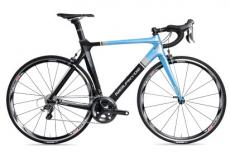
- Ride 2 Recovery who set me up on my first carbon bike with my one leg cycling set-up
- DC Velo to which I was inducted on March 2nd, 2014,
- US Military Endurance Sports (USMES) on which I’m a cycling team race member,
- Paralyzed Veterans Racing (PVR) on which I’m an A-Team member in the Paralympic realm,
- Disabled Sports USA (DSUSA) for which I’m an ambassador,
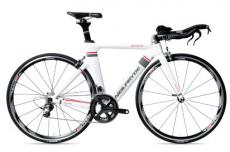
- District Hardware - The Bike Shop who set me up on my first upright race bike, and continues to assist with the technical expertise for my adaptive cycling efforts, and
- Team Pryde where I get to share my journey and passion with other cyclists.
All keep me motivated for my future ahead with cycling, and make me train and race that much harder!
Therefore, I’m certain the road ahead is bright:
- I will immediately be able to sit comfortably in every setting—something I have not been able to do for 9.5 years.
- 6 weeks out from accident after 2 major surgeries, I was cleared to ride the trainer and have been doing so 1 hour a day
- As I start to weight bear on my stump at the Walter Reed Prosthetics Lab on March 3rd, 2014, I project I will be walking normally for the first time in 9.5 years by mid-March—my birthday present to my oldest, 5 year old Malachi who has been anxiously awaiting “daddy’s new leg”with his siblings!
- And of course I will be back on the road still cycling as I did before with my one good leg. The only difference is now I will be using a stump holder so I can continue to get out of the saddle when riding. I’m shooting to be back on the road by March 7th, in time for the US Military Endurance Sport Cycling camp.